News


Best Skincare Gift Set for Men in 2026: What to Buy
A skincare gift set for men only earns its price if the guy already uses half of what's inside, or the set teaches him the other half without wasting his time. This guide covers what separates a set worth giving from a shelf ornament, five OLIRS collection boxes worth considering in 2026, and which combinations to skip. TL;DR The Age-Defying Trio Collection Box is the safe pick for men 30+ already using a moisturiser. Buy. Clear Complexion Collection Box is the strongest skincare gift set for men starting from zero. Buy. Skip any set pairing two brightening serums with the same active — redundant, not complementary. COSMOS NATURAL certification matters more than the box art. Check it before you check the scent. A skincare gift set for men should replace guesswork, not add another unopened bottle to the shelf. What the numbers say €69.70 Fresh Skin Routine Set price 2026 listed price 30 days Return window, unopened 6 Certifications behind OLIRS formulas Why this matters Most gift-guide roundups rank sets by packaging. That's backwards. A skincare gift set for men is really three or four full-size products bundled at a discount, and the only question worth asking is whether those products belong in the same routine or just happen to ship in the same box. OLIRS builds its sets around COSMOS NATURAL certification — Ecocert-audited, meaning a third party checked every ingredient and how it was extracted, not a self-declared "natural" label. That's a mechanism, not a badge, and it's the one thing worth verifying before you buy any set in 2026, from any brand. Who this is for This guide is for the person buying skincare for a man who hasn't built a routine yet, or has one and needs the next step added — birthdays, holidays, a guy who mentioned his skin looks tired but has never bought a serum. It assumes you don't know his exact skin type and need a set that won't backfire if you guess wrong. What to look for in a skincare gift set for men A full routine, not random single items A set that pairs a cleanser, a serum, and a moisturiser teaches routine order — cleanse, treat, hydrate. A set that bundles three unrelated products (a candle, an eye patch, a body wash) teaches nothing and gets used once. If the box doesn't map to "wash, then treat, then protect," it's a gift basket, not a routine. Skin type match, not skin tone or age guesswork Oily and dry skin need different first steps. A gel cleanser for oily-prone skin and a richer cream for dry skin solve different problems, and a set that assumes one skin type fits every man over 30 is guessing. If you don't know his skin type, pick a set built around gentle, broadly tolerated actives — hyaluronic acid, not a strong acid exfoliant. Certification you can check, not a marketing badge "Natural" printed on a box means nothing on its own. COSMOS NATURAL, Vegan, Cruelty-Free, Gluten-Free, Nut-Free, and Paraben-Free are separate, checkable certifications — read the INCI list on the product page and confirm before you assume anything about what's inside. Format he'll actually finish A three-step set gets finished. A seven-step set with unfamiliar tools becomes a guilt object on the sink. Match the step count to how much time he already spends in the bathroom, not to how thorough the box looks on a shelf. No overlapping actives Two products with the same active ingredient stacked in one routine isn't a bonus, it's redundancy — and sometimes irritation. A set with one vitamin C serum and one moisturiser makes sense. A set with two brightening serums pulling in the same direction doesn't; skin only absorbs so much in one application. Top picks The Age-Defying Trio Collection Box — the safe pick. Built as a three-part routine rather than a single hero product, it's aimed at a man already using a moisturiser who needs the next layer, not a first-timer starting cold. Buy if he's 30 or older and has a routine to build on. Clear Complexion Collection Box — the first-timer pick. Sold on the OLIRS site as the Fresh Skin Routine Set, it runs a three-step natural routine at €69.70: an aloe-based Clarifying Gel cleanser for oily and normal skin, paired with a firming day step. It's the set to hand someone who owns zero skincare products and needs order, not options. Buy for a total beginner. Daily Radiance Collection Box — the low-effort pick. Positioned around a shorter routine for a man who wants brightness without adding steps to his morning. Useful if the goal is "looks less tired," not a full anti-aging program. Consider if his current routine is two steps or fewer. Deep Moisture Collection Box — the dry-skin pick. Built around richer hydration, this is the one to reach for if he's already complained about tightness or flaking, especially in colder months. Consider for winter gifting specifically. Rejuvenating Glow Collection Box — the wildcard. A step up in commitment for a man who already has a working routine and wants to layer in something new rather than replace what he uses. Consider only if you know he's past the beginner stage — it's the wrong first gift. Featured products Fresh Skin Routine Set Three-step natural routine: aloe-based Clarifying Gel plus a firming day step. €69.70 2-in-1 Hair & Body Wash for men Hand, body, and hair wash with an uplifting fragrance, add-on to any set. €23 Hyaluronic Acid Face Cream for Men Simple moisturiser, standalone or added to an existing routine. €18.70 What to avoid Two brightening serums in one box. If a set pairs one vitamin C serum with another product targeting the same dark-spot concern, you're paying for overlap, not coverage. Pick one brightening step and one hydrating step instead. Gadget-first sets. A candle or a patch marketed as the headline item isn't a routine — it's a stocking stuffer wearing a routine's price tag. Check what's actually doing the cleansing and moisturising work before you check what smells nice. Sets that lean on "From Farm To Face" as a blanket claim. That line only holds up, ingredient by ingredient, on the Gentle Cleansing Milk and the All-In-One Facial Oil, where the sourcing — Moroccan argan, Mediterranean jojoba, cold-pressed — is documented. Most other products in any brand's catalog, OLIRS included, don't have that level of origin detail yet. Don't assume a set claims more than the label backs up. Verdict comparison Set Best for What you get Verdict Age-Defying Trio Collection Box Men 30+ with an existing routine Three-part layered routine Buy Clear Complexion Collection Box First-time buyers Three-step cleanse-and-firm routine, €69.70 Buy Daily Radiance Collection Box Low-effort mornings Shorter routine focused on brightness Consider Deep Moisture Collection Box Dry or winter-affected skin Richer hydration step-up Consider Rejuvenating Glow Collection Box Men past the beginner stage Added layer on top of an existing routine Consider FAQ What's the best skincare gift set for men in 2026? The Clear Complexion Collection Box is the strongest overall pick for most men in 2026 because it runs a simple three-step routine at €69.70 instead of bundling unrelated items. For a man already using a moisturiser, the Age-Defying Trio Collection Box is the better next step. Is a skincare set better than buying single products for a gift? A set is better when the products inside are built to work together in sequence — cleanser, then serum, then moisturiser. Single products only make sense as a gift if you already know exactly what's missing from his routine. How much does a men's skincare gift set cost? The Fresh Skin Routine Set (listed as Clear Complexion Collection Box) runs €69.70 for a three-step routine as of 2026. Standalone products in the same catalog run from €18.70 for a face cream to €26 for a moisturising gel, so a bundled set is usually priced below buying the same items separately. Does natural mean the same thing as organic on a skincare label? No. COSMOS NATURAL and COSMOS ORGANIC are two separate Ecocert certifications with different standards, and a product certified NATURAL has not been certified ORGANIC. Always check which certification is actually listed on the product page rather than assuming from the word 'natural' on the box. What skincare gift should I avoid buying for a man who's never used any? Avoid multi-step sets with unfamiliar tools or a seven-step routine — they get used once and then sit unopened. A three-step set with a cleanser, one treatment step, and a moisturiser is the realistic starting point for 2026. Can I return a skincare gift set if he doesn't like it? OLIRS runs a 30 calendar day return window on unused, unopened products, so check that the set you're buying qualifies before purchase. Opened products are typically excluded from most skincare return policies, this one included. What's the difference between a moisturiser and a serum in a gift set? A serum delivers a concentrated active — vitamin C, hyaluronic acid, a peptide — and goes on after cleansing but before moisturiser. The moisturiser then seals that in and adds its own hydrating ingredients; skipping the moisturiser step lets the serum evaporate rather than absorb. Should I buy a skincare gift set based on the scent? Scent is the last thing to check, not the first. Confirm the routine structure and certification first, then treat fragrance as a tiebreaker between two sets that already pass on ingredients and step count. One last thing Most brands that print "From Farm To Face" on the box can't actually trace a single ingredient past the word "natural." In OLIRS's own catalog, only two products can: the All-In-One Facial Oil, sourced from Mediterranean jojoba, Carpathian rosehip, and Himalayan sea-buckthorn, and the Gentle Cleansing Milk, which pulls its argan from a UNESCO biosphere reserve in Morocco. If a set claims full origin traceability across every product inside it, ask which ingredient in which product — most of the time, in 2026, that level of detail still doesn't exist industry-wide. Related guides Skincare set for first-time buyers A simple skincare routine for men who hate fuss
Learn more
How to Fix Razor Bumps on Your Neck for Good (2026)
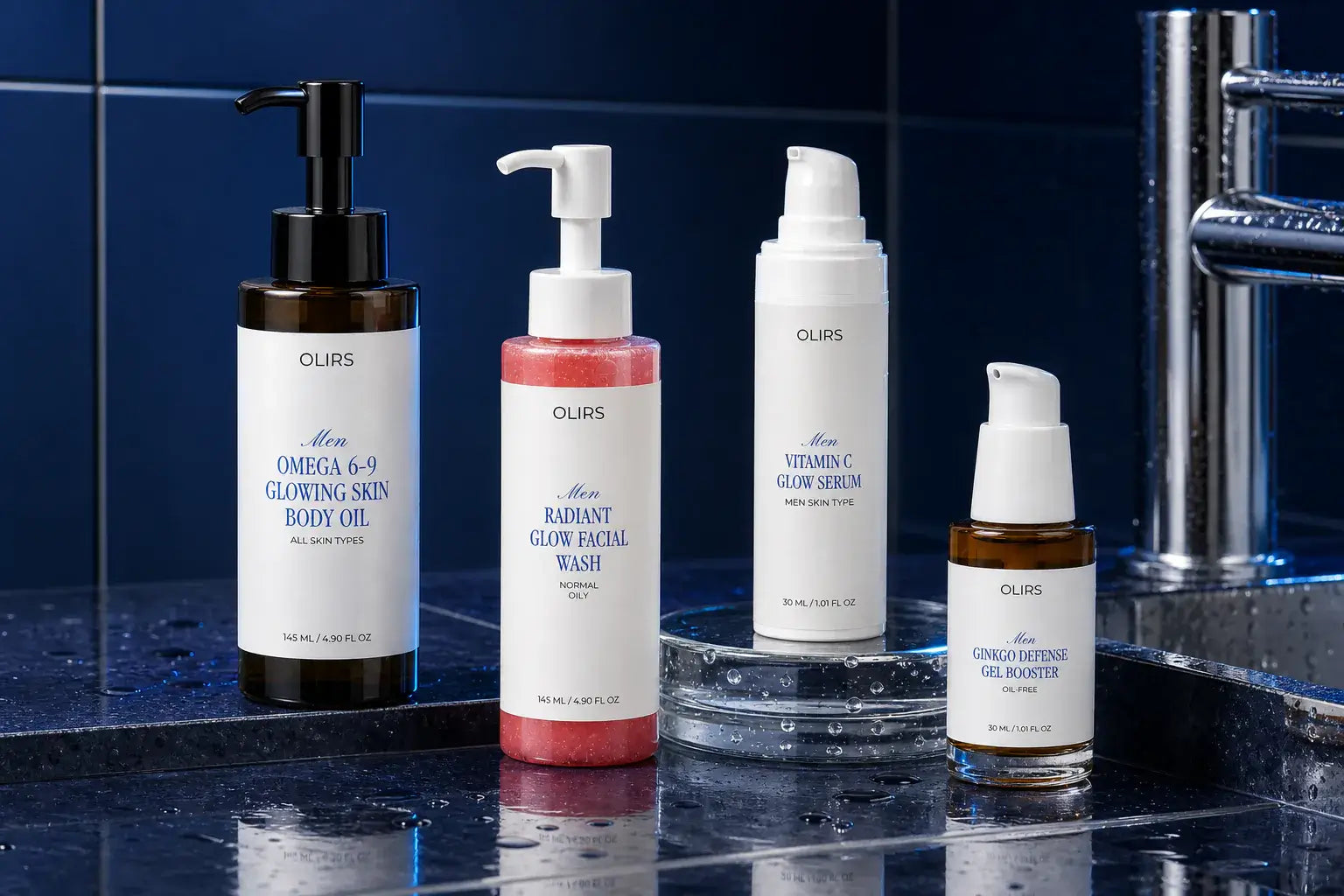
Razor bumps on the neck come from curved hair curling back into skin after a close shave, not from a dirty blade or bad genetics. Fix the shave itself in 2026 and most bumps clear without changing your whole routine. TL;DR Razor bumps on the neck happen when curved hair re-enters skin after a close shave — fix the direction, not the pressure. Swap your blade every 5-7 shaves; a dull blade tugs hair instead of cutting it clean. Buy a fresh blade before you need one. OLIRS Daily Clarifying Gel Cleanser softens hair before the blade touches it — wash first, always, not after. Skip alcohol aftershave on irritated skin; a lightweight gel like Ginkgo Defense Gel Booster calms it without stinging. A bump that doesn't move under light pressure and lasts past two weeks needs a dermatologist, not another product. Numbers that matter 5-7 shaves Blade change interval before drag increases 60 seconds Warm water softening time 48 hours Rest time before re-shaving a bump Why razor bumps show up on your neck Neck hair grows in more directions than jaw hair, which is exactly why bumps cluster there more than anywhere else on the face. When a curved hair gets cut too short and skin closes over the tip before it exits, it curls back and the follicle reacts like it's under attack. That reaction is the bump. Shaving against the grain for a "closer" finish is the single biggest cause. It cuts hair below skin level, which sets up the ingrown hair before you've even rinsed off. Hot showers make it worse — they strip the skin's natural oil before you pick up the razor, so hair goes brittle and skin dries out mid-shave. That's a cause you control directly, not genetics. Washing first with a gentle cleanser like the OLIRS Daily Clarifying Gel Cleanser removes oil buildup that dulls a blade's glide, without stripping skin the way a bar of soap does. This won't undo scarring from years of picking at old bumps — that needs different care entirely. It will stop new ones from forming and calm the ones caused purely by shaving technique. What you'll need A sharp razor — single or double-blade, not a five-blade cartridge that tugs more than it cuts A gentle pre-shave cleanser Warm water, no more than 60 seconds of contact before you shave A soothing, alcohol-free post-shave gel 10-15 minutes, most of it patience rather than product The steps 1. Wash before you shave, not after Cleanse the neck with warm water and a gentle cleanser for 30 to 60 seconds. This removes surface oil and softens the hair shaft so the blade glides instead of drags. Skipping this and shaving straight out of a hot shower just moves oil around — it doesn't remove it, and that's the mistake most guys make without noticing. 2. Check the grain direction on the neck specifically Run a finger up your neck against the hair growth — it's usually a different direction than your jaw. Shave with the grain on the first pass, every time, on the neck. Shaving against the grain for a closer finish is the number one cause of neck ingrown hairs because it cuts hair under skin level. 3. One pass, light pressure Let the blade do the work. Multiple passes over the same patch of skin is what separates a clean shave from an irritated one. Expect a slightly less "close" result and noticeably less redness within a day. 4. Rinse cold, pat dry Cold water closes pores faster than warm. Patting — never rubbing — avoids re-opening follicles that were just cut. 5. Skip alcohol, use a lightweight gel Alcohol-based aftershave dries skin out right when it needs to recover, which slows down healing, not speeds it up. A Radiant Glow Face Wash rinse followed by an oil-free antioxidant gel gives skin what it needs without clogging follicles that are already inflamed. 6. Change your blade every 5-7 shaves A dull blade needs more passes to cut the same hair, which means more drag and more chances of cutting a hair below the skin. Five to seven shaves is roughly the point most blades start pulling instead of cutting on neck hair, which runs coarser than jaw hair for most men. 7. Rest the area 48 hours if a bump appears Shaving directly over an active bump reopens it. Skip that patch for two full days, let it settle, then come back with a lighter touch and a fresh angle. For post-shave care Radiant Glow Face Wash Aloe and blackberry gel cleanser, 98% natural-origin, fresh clean rinse before shaving. €31.40 Daily Clarifying Gel Cleanser Aloe-based gel cleanser, soft lather, no tight or dry feel after rinsing. €28.40 Ginkgo Defense Gel Booster Lightweight, oil-free antioxidant gel with ginkgo, green tea, oak bark, grape seed. €25.50 Troubleshooting Bump won't go down after a week. Stop shaving that exact spot, apply a calming gel twice daily, and if it's still raised past two weeks, that's a dermatologist job, not a shaving fix. New bumps in the same three spots every time. You're shaving against the grain in that patch specifically. Check direction with a mirror at an angle, not just by feel — grain often changes right under the jawline. Redness right after shaving, gone by the next morning. That's normal razor irritation, not a bump. A cold rinse plus a lightweight gel usually clears it same-day. A bump with a visible white or yellow center. Stop picking at it and keep it clean. If it doesn't settle in 5-7 days, see a doctor — this is outside what any skincare product is built to handle. Switched to a five-blade cartridge and bumps got worse. More blades cut hair shorter per pass, which raises ingrown hair risk on coarse or curly neck hair. Go back to fewer blades. Bumps only show up after the gym or a hot day. Sweat plus collar friction irritates healing follicles. Rinsing the neck promptly and wearing a clean collar helps more than any product will. What to do next If the bumps you're dealing with lean more toward burning and stinging than raised texture, that's a different problem with a different fix — read the face serum guide for razor burn and irritation before adding anything new to your routine. Layering more product onto burn-type irritation usually makes it worse, not better. FAQ What's the fastest way to fix razor bumps on the neck? Stop shaving that exact area for 48 hours and apply a lightweight, alcohol-free gel twice a day. Most technique-caused bumps calm down within 2-3 days once the follicle isn't being reopened. Is shaving with the grain actually better than against it? Yes, on the neck specifically. Shaving against the grain cuts hair below skin level, which is the direct mechanism behind most neck ingrown hairs. How often should I change my razor blade? Every 5-7 shaves for most men. A dull blade needs more passes over the same skin, and more passes means more chances to cut a hair short enough to curl back in. Do razor bumps go away on their own? Minor ones from a single bad shave usually clear in 24-48 hours without treatment. Recurring bumps in the same spot won't resolve until the shaving technique causing them changes. Should I exfoliate if I already have razor bumps? Not while a bump is active — exfoliating over inflamed skin adds irritation. Once skin has calmed, light exfoliation 2-3 times a week can help prevent new ones from forming. Can a cleanser really prevent razor bumps? A cleanser alone won't stop ingrown hairs, but washing before you shave removes the oil buildup that makes a blade drag, which is one of the mechanical causes of bumps. Is an electric razor better than a blade for razor bumps? Electric razors cut less close to the skin, which lowers ingrown hair risk for some men, but the trade-off is a less close shave. Test one area for two weeks before switching fully. When should I see a doctor about razor bumps? See a doctor if a bump has a visible white or yellow center and hasn't resolved in 5-7 days, or if the same spot keeps getting infected. That's outside what shaving adjustments or skincare can fix. One last thing The detail almost nobody checks: hair on the neck is genuinely coarser and grows in more directions than hair on the jaw, which is why a routine that works fine above the jawline can still cause bumps below it. Treat the neck as its own shave, with its own grain check, not an extension of the jaw pass. That one habit change fixes more 2026 razor bump complaints than any product swap. Related guides Gentle cleanser for men with beards A simple skincare routine for men who hate fuss
Learn more
Best Gentle Cleanser for Men Who Shave Daily (2026)
A daily shave strips your skin barrier before your cleanser ever touches it, so the wrong wash finishes the job your razor started. This guide ranks the gentle cleansers worth using on shave days in 2026, with the one to buy first and the two ingredients to actually check on the label. TL;DR Gentle Cleansing Milk is the best gentle cleanser for men who shave daily — cold-pressed, COSMOS Natural certified. Buy. Daily Clarifying Gel Cleanser is the pick for oily-prone skin that still needs a pH-considerate wash. Buy. Skip sulfate-heavy foaming cleansers right after shaving — they strip skin that's already compromised. Skip. Read the INCI list before trusting any cleanser marketed for razor burn or sensitive skin. Why daily shaving changes what "gentle" means A razor doesn't just cut hair. It scrapes the top layer of dead skin cells and micro-abrades the surface, which is why skin feels tight and looks pink for an hour afterward. Skin's natural surface pH sits around 4.7 to 5.75, according to the widely-cited Lambers et al. work published in the International Journal of Cosmetic Science in 2006 — and a cleanser well above that range (most bar soap sits at 9 to 10) leaves skin more reactive to everything that follows: aftershave, sunscreen, and the next day's razor pass. That's the entire reason "gentle" matters more for a daily shaver than for someone who shaves twice a week. Gentle Cleansing Milk is built around that math — a cold-pressed blend of shea, argan, and jojoba oils that cleanses without pushing skin toward the alkaline end. It's one of only two products in the OLIRS catalog with a full, traceable ingredient origin, which matters if you're the type who wants to check where the oil actually came from before you check what it costs. The men most likely to notice the difference: anyone shaving five or more times a week, anyone with a beard line that stays irritated for a day after a cut, and anyone who's already switched cleansers once because the first one left skin feeling stripped. How this list was ranked Every cleanser here is judged on formulation criteria that matter specifically after a razor pass, not general skincare hype: surfactant harshness, pH profile where disclosed, whether the formula is foaming or non-foaming (foaming pulls more oil and moisture off freshly-shaved skin), fragrance load, and certification status. COSMOS NATURAL, held by OLIRS and audited by Ecocert, is treated as a mechanism, not a badge — it means a third party checked every ingredient and how it was extracted, not that the formula is automatically gentler. Read the INCI on anything you're considering; that habit alone rules out most of the cleansers that market themselves as "for sensitive skin" without disclosing what's actually in the bottle. The ranked list 1. Gentle Cleansing Milk — the safe pick A non-foaming, cream-to-milk cleanser built on cold-pressed shea (West Africa), argan (Morocco's UNESCO argan biosphere reserve), and jojoba (Mediterranean basin). Non-foaming formulas don't strip the lipid layer the way sulfate-based foams do, which is the whole argument for using one on shave days. It's COSMOS Natural certified, vegan, and paraben-free — check the certification yourself rather than taking the claim on faith. Verdict: Buy, specifically for daily shavers with dry or reactive-feeling skin. 2. Daily Clarifying Gel Cleanser — the everyday workhorse An aloe-based gel cleanser that produces a soft lather without the tight, dry finish that heavier foaming gels leave behind. Daily Clarifying Gel Cleanser is built for oilier skin types that still need something they can use every morning without irritation stacking up over a week of shaving. Organic aloe juice in the formula is there to help skin feel hydrated through the rinse, not to fix oiliness outright — it won't. Verdict: Buy, for combination-to-oily skin that shaves daily. 3. Cleansing Foam — the value pick A lighter foaming option that sits between a gel and a full lather. Foam formulas move faster in a morning routine, which matters if 45 seconds is the actual budget you have before work. The trade-off is that foam formulas generally clear more surface oil than a milk or gel, so skin can feel slightly tighter right after a shave. Verdict: Consider, if speed matters more than post-shave comfort. 4. Purifying Mousse — the oily-skin pick A mousse texture built for men managing shine and congestion rather than dryness. It's a reasonable option for shave-day cleansing if your skin runs oily enough that a milk cleanser feels like it's not doing enough. It is not the formula to reach for if your skin already feels raw an hour after shaving — mousse and foam textures both work harder on surface oil than a cream does. Verdict: Consider, for oily skin only. 5. Radiant Glow Facial Wash — the skip for shave days A facial wash aimed at general daily cleansing rather than post-shave sensitivity. Nothing wrong with the formula on a non-shave day, but it's not built with razor-stressed skin as the target use case, and there are better-suited options on this list for that specific job. Verdict: Skip, if daily shaving is the reason you're shopping. Cleansers and post-shave hydration Gentle Cleansing Milk Creamy, cold-pressed cleanser for dry or reactive-feeling skin. Non-foaming. €28.40 Daily Clarifying Gel Cleanser Aloe-based gel cleanser with a soft lather for combination-to-oily skin. €28.40 Oil-Free Zinc Face Gel for Men Simple, lightweight moisturiser for after cleansing. €26 Hyaluronic Acid Face Cream for Men Everyday moisturiser to follow cleansing in a shave-day routine. €18.70 Comparison table Cleanser Texture Best for Foaming 2026 Verdict Gentle Cleansing Milk Cream/milk Dry, reactive, daily shavers No Buy Daily Clarifying Gel Cleanser Gel Combination to oily, daily shavers Light Buy Cleansing Foam Foam Speed over comfort Yes Consider Purifying Mousse Mousse Oily, congestion-prone skin Yes Consider Radiant Glow Facial Wash Wash General daily use, non-shave days Yes Skip for shave days A cleanser that's too harsh right after a razor pass is one of the more common reasons men end up with lingering redness that gets mistaken for razor burn on its own — the face serum for razor burn and irritation guide covers what's actually happening on the skin surface in that case, and it's often the cleanser, not the razor. Where to buy Buy direct from the brand's own site whenever possible — third-party marketplace listings for skincare are one of the more common places counterfeit or reformulated stock shows up, and you lose the ability to check batch and certification info against the product page. Check the INCI list on the product page before ordering, not after; ingredient order matters, and the first five ingredients tell you most of what you need to know. OLIRS ships to 41 countries and runs a 30-day return window on unused, unopened products in 2026, so there's no reason to buy a full-size bottle of anything without reading the label first. FAQ What's the best gentle cleanser for men who shave every day? Gentle Cleansing Milk is the strongest fit for daily shavers in 2026 because it's non-foaming and built on cold-pressed shea, argan, and jojoba oil rather than sulfates. Non-foaming formulas pull less lipid off skin that's already been micro-abraded by a razor. Should I use a foaming or non-foaming cleanser after shaving? Non-foaming cleansers are generally the better call right after a shave because foam and mousse textures clear more surface oil, which can leave freshly-shaved skin feeling tighter. A gel like Daily Clarifying Gel Cleanser is a middle ground if you still want some lather. Is COSMOS Natural certification the same as organic? No. COSMOS NATURAL and COSMOS ORGANIC are two separate certifications from Ecocert, and OLIRS holds COSMOS NATURAL, not organic. COSMOS NATURAL means a third party audited the ingredients and how they were extracted. How much does a gentle men's cleanser cost in 2026? Gentle cleansers built for daily use typically run in the €20 to €30 range in 2026, depending on formula and certification. Prices for the products in this guide sit within that range on the OLIRS site. Can a cleanser actually cause razor burn? A cleanser doesn't cause razor burn directly, but a high-pH or sulfate-heavy formula strips skin's protective layer, making it more reactive to the razor pass that follows. Switching to a non-foaming, lower-irritation cleanser is often the fix men reach for after trying a new razor first. Do I need a separate cleanser for beard skin? Not necessarily, but beard skin traps more oil and product buildup than clean-shaven skin, which changes what "gentle" means. A dedicated look at that difference is worth reading before assuming one cleanser fits both cases. Is a face wash the same as a cleanser? The terms get used interchangeably, but a face wash is usually a foaming, general-purpose formula while a cleansing milk or cream is built for lower irritation. For daily shavers, the distinction matters more than the label. One last thing Only two products in the entire OLIRS catalog can currently back a real, traceable ingredient origin story: Gentle Cleansing Milk and the All-In-One Facial Oil. That's not a marketing gap — it's an honest one, and it's worth checking origin claims on any brand's cleanser the same way, because most companies won't show you the region an oil actually came from. Related guides Gentle cleanser for men with beards Gentle facial cleanser for sensitive skin
Learn more
Quick Night Skincare Routine for Men (2026): 2-Minute Steps
Fitting a full night skincare routine for men into two minutes means cutting the routine down to four steps that actually do something, not skipping steps that matter. Here's the exact order, timed. TL;DR A quick night skincare routine for men fits into 120 seconds across four steps: cleanse, serum, moisturize, eye cream. Bakuchiol in the Advanced Night Renewal Serum works overnight without the peeling retinol causes on new users. Skip double-cleansing and sheet masks on weeknights - one cleanser and one moisturizer beats a 10-step routine you quit by Wednesday. COSMOS Natural certification means every ingredient in Olirs formulas was audited by Ecocert, including how it was extracted. Why this matters Most men don't skip skincare because they don't care. They skip it because the version they saw online has nine steps and a toner they can't pronounce. A routine that takes two minutes gets done in 2026 the way a 20-minute one never will - every night, not just Sundays. The order matters more than the number of products. Cleanser removes the day's oil and sunscreen. Serum delivers the active ingredient while skin is still slightly damp, which helps it absorb. Moisturizer seals the water in. Skip the order and you're just layering products that fight each other. What you'll need A gentle cleanser - the Radiant Glow Facial Wash works on most skin types without stripping it A night treatment serum with an active ingredient (bakuchiol, peptides, or vitamin C) A moisturizer that isn't the same one you use under sunscreen in the morning An eye cream, optional but worth the extra 15 seconds A phone timer, at least the first week, to prove to yourself it's actually two minutes You do not need a toner, an essence, a sheet mask, or a jade roller to make this work. Those add time without adding much appearance benefit for a nightly routine. The steps 1. Rinse and cleanse - 20 seconds Splash your face with lukewarm water, not hot. Hot water strips the skin's natural oil barrier, which is the opposite of what a night routine is trying to protect. Work the cleanser in with your fingertips for about 15 seconds, focused on the jaw, nose, and forehead where oil builds up during the day. Common mistake: scrubbing with a washcloth or brush every night. That's for exfoliating twice a week, not daily cleansing - daily scrubbing is what leaves skin feeling tight and reactive by 2026's second month of use. 2. Apply the serum while skin is still damp - 20 seconds This is the step men skip first when they're rushing, and it's the one doing the most work. The Advanced Night Renewal Serum uses bakuchiol, a plant-derived ingredient people reach for when retinol makes their face peel. It works slower than retinol. That's the trade, and it's a fair one for a two-minute routine you want to keep doing. A pea-sized amount covers the whole face. Pat it in rather than rubbing - rubbing pulls at skin that's about to be even more elastic once it's damp. Common mistake: applying serum to bone-dry skin straight out of the shower ten minutes later. Damp skin absorbs more of the active ingredient; dry skin just sits there under it. 3. Lock it in with moisturizer - 20 seconds Wait roughly 30 seconds after the serum before moisturizing. That gap gives the active ingredient time to sit on skin instead of getting diluted and pushed around by a second product going on wet. The Hyaluronic Acid Face Cream for Men is a simple option built for exactly this - one product, no fragrance overload, easy to use daily. Common mistake: using the same tub of moisturizer morning and night. Morning moisturizer usually sits under sunscreen and is built to be light. Night skin doesn't need that constraint - it can handle something slightly richer. 4. Eye cream, if you're using one - 15 seconds Dark circles under the eyes usually aren't about sleep. Skin there is thinner than anywhere else on the face, and thinning skin lets the blood vessels underneath show through more. A 3-in-1 eye cream targets that area specifically instead of relying on whatever moisturizer runs off your fingers on the way past. Use your ring finger - it applies the least pressure - and tap, don't drag, from the inner corner outward. Common mistake: applying eye cream too close to the lash line. It migrates into the eye within minutes and does nothing useful there except sting. 5. Stop That's the routine. Four steps, roughly 120 seconds start to finish once you've done it a week and stopped fumbling with caps. Anything past this - retinol boosters, sheet masks, jade rollers - is for the nights you actually have ten minutes, not the default. The math 120 seconds Full routine, four steps 30 seconds Wait time between serum and moisturizer 4 steps Cleanse, serum, moisturize, eye cream Built for a two-minute routine Advanced Night Renewal Serum Evening bakuchiol oil serum for smoother-looking, comfortable skin. €35.40 Hyaluronic Acid Face Cream for Men Simple moisturiser for men, built as a stand-alone step or added to a routine. €18.70 Oil-Free Zinc Face Gel for Men Oil-free moisturiser option for oilier skin types. €26 Troubleshooting Serum pills up under moisturizer. You're applying moisturizer too fast. Give the serum a full 30 seconds to sink in before the next layer. Skin feels tight after cleansing. The cleanser is too harsh for nightly use, or the water was too hot. Switch to lukewarm water and check the cleanser isn't a foaming, sulfate-heavy formula. Redness or mild irritation the first week of a new serum. This is common with active ingredients, including bakuchiol. Drop to every other night for the first two weeks, then build up. You keep forgetting the routine entirely. Keep the three products on the nightstand, not in a cabinet. A routine you have to walk to gets skipped more than one that's already in front of you. Product ends up on the pillow by morning. You're using too much. A pea-sized amount of serum and a dime-sized amount of moisturizer is enough for a full face. Two minutes still feels rushed. Do the routine before you brush your teeth, not after. Toothpaste foam near the eyes is its own irritant, and rushing the last step to avoid it defeats the point. Tools and resources A gentle cleanser: Radiant Glow Facial Wash A night serum with bakuchiol or peptides: Advanced Night Renewal Serum A daily moisturizer built for men: Hyaluronic Acid Face Cream for Men An eye cream for the thinner skin around the eyes, such as the 3-in-1 Eye Cream for Men A phone timer for the first week, until the routine becomes automatic Read the INCI list on whatever you buy, and check the certification claims before trusting them. Olirs formulas carry COSMOS Natural certification from Ecocert, which means a third party audited every ingredient and how it was extracted - not a self-declared "clean" label with nothing behind it. What to do next A two-minute routine is the floor, not the ceiling. Once it's automatic, the next upgrade is usually adding one targeted step three or four nights a week - an eye treatment, a peptide serum, or swapping in a stronger active once your skin has adjusted. Building the base routine first is what makes that next step worth doing instead of one more product gathering dust by the sink. FAQ What's the fastest night skincare routine for men? A four-step routine - cleanse, serum, moisturize, eye cream - takes about 120 seconds once you've done it a few times. Cutting below four steps usually means dropping the serum, which is the step doing the most for skin appearance. Do you need a separate night cream if you already use a day moisturizer? Not strictly, but it helps. Day moisturizers are often built lighter to sit under sunscreen, while a night formula can carry more without that constraint. Using the same tub morning and night isn't wrong, just less efficient. Is bakuchiol a good retinol alternative for beginners? Yes - bakuchiol works more slowly than retinol but causes less peeling and irritation for someone starting an active-ingredient routine for the first time in 2026. It's a reasonable first step before trying stronger actives. How long should you wait between serum and moisturizer at night? About 30 seconds is enough for a serum to start absorbing before the next layer goes on. Waiting longer doesn't hurt, but rushing it means the moisturizer just pushes the serum around instead of letting it sit. Can you skip toner in a quick night routine? Yes. Toner isn't a required step for most skin types, and cutting it is one of the easiest ways to bring a routine from four minutes down to two without losing anything meaningful. What order do you apply night skincare products? Cleanser first, then serum on damp skin, then moisturizer, then eye cream last since it needs the lightest touch. Going out of order - moisturizer before serum, for example - blocks the active ingredient from absorbing properly. How much does a basic men's night routine cost in 2026? A cleanser, a serum, and a moisturizer typically run in the roughly €20 to €35 per-product range depending on the formula - check current pricing on the product page before buying, since it shifts by size and bundle. Is a two-minute routine enough to see results? For appearance changes like smoother texture or a more even look, consistency matters more than routine length. A two-minute routine done every night in 2026 outperforms a 10-minute routine done twice a month. One last thing The step men cut first - the serum - is the one with the actual active ingredient in it. Cleanser and moisturizer are maintenance. If you only have time for two of the four steps some nights, keep the cleanser and the serum, and let the moisturizer wait until morning. Apply it to skin that's still slightly damp from rinsing, not bone dry - that's what actually helps a formula absorb, not how expensive the bottle was. Related guides A simple skincare routine for men who hate fuss Night serum for men who work late shifts
Learn more
Travel Skincare Routine for Men: 2026 Buying Guide
A travel skincare routine for men in 2026 has to survive a carry-on bag, a hotel bathroom sink the size of a dinner plate, and three time zones without turning into six half-used bottles. Here's what actually holds up on the road and what stays home. TL;DR A travel skincare routine for men in 2026 needs three products, not eight — start with a multi-use wash. 2-in-1 Hair & Body Wash for men replaces two bottles with one — Buy for carry-on trips. Firm-Look Day Cream Travel Size is the only OLIRS moisturizer built at carry-on volume — Buy. All-In-One Facial Oil covers serum and moisturizer in one cold-pressed bottle — Buy. Skip full-size glass jars and six-step routines — TSA limits and hotel counters don't fit either. Why this matters Cabin air on a commercial flight commonly sits below 20% relative humidity — drier than most deserts. Skin loses water faster than it can replace it, which is why a face looks duller and tighter after a five-hour flight than it did at the gate. That's a moisture problem, not an ageing problem, and it's fixable with the right two or three products instead of a full bathroom shelf. The other constraint is logistics, not skin. Carry-on liquids get capped at 3.4 oz (100 ml) per container in a single quart bag under TSA rules, and checked bags get thrown, stacked, and occasionally crushed. A travel skincare routine for men that ignores either of those facts gets left behind by week two. Who this is for This is for the man who's on a plane at least once a month — for work, not vacation — and whose skincare routine currently falls apart the moment he packs a bag. He's not choosing between ten serums. He's choosing between packing three products that work or packing nothing and dealing with it when he lands. What to look for in travel skincare for men Multi-use over single-purpose A product that does two jobs beats two products that each do one. A hair-and-body wash that also works as a quick hand soap means one bottle instead of two, which matters more than it sounds when you're packing for a five-day trip in a 20-inch bag. Fits inside the carry-on liquid limit Anything over 3.4 oz (100 ml) either goes in checked luggage or gets tossed at security. A dedicated travel-size product — not a decanted full-size one — is built for that limit from the start, so it doesn't leak halfway across the bottle. Non-glass, leak-resistant packaging Glass jars crack in a suitcase. A pump or squeeze tube that seals flat survives a gate check and a cargo hold. This is a packaging question, not a formula question, but it decides what actually makes it to the hotel intact. Works across climates, not just at home A formula built for one bathroom's humidity can feel wrong in another. Jojoba oil sits close to skin's natural sebum, which is part of why it behaves consistently whether the room is humid Miami or dry Denver — it doesn't rely on ambient moisture the way a water-heavy gel does. A routine you'll actually finish in a hotel bathroom Two minutes, three steps, done. If the routine needs a countertop full of jars to work, it gets skipped on travel days — and a skincare routine you skip half the time isn't a routine, it's a habit you're still building. Built for a carry-on 2-in-1 Hair & Body Wash for men Hand, body, and hair wash in one bottle for men's routines. €23 Firm-Look Day Cream Travel Size Travel-size daily cream with multi-molecular hyaluronic acid. €22.40 Oil-Free Zinc Face Gel for Men Lightweight, oil-free moisturiser for men's skin. €26 Top picks for a travel skincare routine for men The multi-tasker. 2-in-1 Hair & Body Wash for men covers hand, body, and hair with one bottle at €23, which means one fewer thing to fit in a quart bag. It's not marketed as a face wash and shouldn't be used as one — that's a different job. For everything below the neck on a short trip, it does the work of two bottles at once. Buy. The travel-size specialist. Firm-Look Day Cream Travel Size is the one OLIRS moisturizer actually built at carry-on volume, at €22.40, with multi-molecular hyaluronic acid to help skin look plump and hydrated after a dry flight. If your current moisturizer only comes full-size, this is the one product on this list built specifically to solve the packing problem. Buy. The one-bottle face routine. All-In-One Facial Oil uses cold-pressed jojoba from the Mediterranean basin, rosehip from Carpathian Eastern Europe, and sea-buckthorn sourced from the Himalayan and Central Asian region — three oils, one bottle, no separate serum step. It's one of only two OLIRS products that can back the From Farm To Face slogan with a real, traceable origin, and it does the job of a serum and a light moisturizer in a single dropper bottle. It won't fix deep lines or scarring — it helps skin feel less tight after a long flight. Buy. The quick-rinse cleanser (no link, worth knowing). Gentle Cleansing Milk is the second OLIRS product with a real, checkable origin story — shea from West Africa, argan from a UNESCO-protected biosphere reserve in Morocco, and jojoba, all cold-pressed. It rinses fast, which matters more at a hotel sink at 6am than it does at home. Consider if you already own a cleanser that's running low. What to avoid Full-size glass jars. They crack in a packed suitcase and they don't fit the 3.4 oz carry-on rule anyway. Save them for the bathroom shelf. Six-step routines built for a home counter. A serum, an essence, two moisturizers, and an eye cream is a lot to unpack for a two-night trip. Pare it down before you travel, not after you've missed three days of it. Decanting full-size product into travel bottles. It works until it leaks in a laptop bag. A dedicated travel-size SKU is sealed for that purpose from the factory; a repurposed dropper bottle usually isn't. Verdict comparison Pick Best for Format Verdict 2-in-1 Hair & Body Wash for men Body and hair, one bottle Pump, 1 bottle Buy Firm-Look Day Cream Travel Size Daily hydration, carry-on legal Travel-size tube Buy All-In-One Facial Oil Serum + moisturizer in one step Dropper bottle Buy Gentle Cleansing Milk Fast morning rinse Pump bottle Consider All four are made under the same COSMOS NATURAL certification OLIRS holds across its catalog — meaning a third party (Ecocert) audited every ingredient and how it was extracted, not just the finished formula. That's a mechanism, not a marketing badge: read the INCI list on any product page and check it yourself before you pack it. FAQ What's the best travel skincare routine for men in 2026? A cleanser, a travel-size moisturizer, and one multi-use product covers most short trips. Firm-Look Day Cream Travel Size and All-In-One Facial Oil handle hydration and light serum work in two products instead of five. Can you take skincare on a plane in a carry-on? Yes, as long as each container holds 3.4 oz (100 ml) or less and fits in one quart bag under TSA rules. Anything larger needs to go in checked luggage. Is a travel-size moisturizer different from a full-size one? The formula is usually the same; only the container size and the carry-on legality change. Firm-Look Day Cream Travel Size, for example, uses the same hyaluronic acid formula as the full-size version at a volume that clears security. How many skincare products should a man travel with? Two to three covers most trips: a cleanser, a moisturizer or facial oil, and a multi-use wash for hair and body. More than that usually gets skipped by day three of a trip. Does a facial oil replace a moisturizer when traveling? A cold-pressed oil like All-In-One Facial Oil can replace a separate serum and light moisturizer step for most skin, though it won't fix scarring or deep texture. It's a packing shortcut, not a stronger formula. How do you keep skin from drying out on a flight? Apply a hydrating product before boarding and again mid-flight if it's over four hours, since cabin humidity commonly runs below 20%. Avoid touching your face repeatedly, which pulls oil and moisture off the skin faster in dry air. Is 2-in-1 hair and body wash bad for your face? It's not built for the face and shouldn't replace a dedicated facial cleanser. It's designed for hair and body use, which is exactly where it earns its spot in a carry-on. What certification should I check before buying travel skincare? COSMOS NATURAL, issued by Ecocert, confirms a third party audited both the ingredients and how they were extracted. It's worth checking the INCI list yourself rather than taking a brand's word for it. One last thing Most men over-pack skincare for a three-day trip and under-pack it for a two-week one — the instinct runs backwards. A short trip survives on whatever's already working at home in travel-size form; a long trip is where a multi-use product like the 2-in-1 wash actually pays for itself, because you're doing laundry-sink math on bottle space by day four either way. Related guides A simple skincare routine for men who hate fuss Face oil for dull, tired-looking skin
Learn more
How to Layer Face Oil and Serum in 2026 (No Grease)
Layering face oil over serum only works if you get the order and the amount right. Reverse the sequence and you get a slick, heavy finish that sits on skin for hours instead of settling in. TL;DR Layer serum first on damp skin, then facial oil — reversing that order is what causes the greasy look. Two drops of a facial oil like All-In-One Facial Oil covers a full face; more just sits on top. Wait 60 seconds after serum before applying oil so actives absorb instead of pilling underneath. Oily or acne-prone skin: keep oil off the T-zone and use it on cheeks and jaw only. Read the INCI before adding a new oil — heavier oils behave very differently from a jojoba-led blend. The numbers that matter 2 drops Facial oil per full-face application 60 seconds Wait time between serum and oil Why this matters Most men who tried face oil once and quit blame the oil. It's usually the order. Facial oil is occlusive — it sits on top of skin and slows water loss. A water-based serum works differently: it needs direct contact with damp skin to carry hyaluronic acid, vitamin C, or peptides where they're supposed to go. Put oil on first and serum never gets through; it slides around on top, so you use more of both to compensate. That's the greasy window everyone complains about in 2026 skincare threads. The fix is sequencing, not swapping products. All-In-One Facial Oil or any single-oil product behaves the same way once the order is right: serum on damp skin, a short wait, then oil pressed in, never rubbed. Two drops finishes a full face. More than that builds a film that takes an hour to settle, which is exactly the complaint. What you'll need A water-based serum with an active you actually want — vitamin C, peptides, or plain hyaluronic acid A facial oil, 1-3 drops per application depending on face size Clean, slightly damp skin, straight out of the shower or after cleansing A towel for patting dry, not a wipe — patting leaves the right amount of moisture behind 60 seconds you're not tempted to skip Optional: moisturiser or SPF if you're layering for daytime The steps 1. Cleanse and leave skin slightly damp Wash with a gentle cleanser and stop before you're bone dry. Water-based actives absorb faster into damp skin, and oil applied later has less work to do trapping moisture that's already there. Common mistake: towel-drying completely, then wondering why serum won't sink in. 2. Apply serum first, no exceptions Serum goes on before oil every time. A vitamin C serum or a peptide serum needs direct contact with skin to do anything; oil applied first blocks that contact entirely. Press two or three drops into cheeks, forehead, and jaw. Don't run two near-identical actives back to back — Vitamin C Glow Serum and Even-Tone Glow Serum sit close enough in formula that using both adds cost, not results. 3. Wait a full 60 seconds Give the serum 60 seconds before adding anything on top. That's roughly how long a water-based formula needs to stop feeling tacky on the surface. Rushing this step is the single biggest reason oil ends up floating on skin instead of blending into it. 4. Warm the oil between your palms Rub one or two drops between your palms for a few seconds before touching your face. Warming spreads oil thinner and helps it distribute evenly, instead of landing as one concentrated patch — the usual cause of a shiny center-of-face look by early afternoon. 5. Press it in, don't rub it in Press oil into skin rather than working it in circles. Rubbing pushes product around; pressing lets it settle. If your nose and forehead run oilier than your cheeks and jaw by nature, keep oil to the drier zones and skip the T-zone entirely. “Press oil into skin, don't rub it in — rubbing pushes product around instead of into skin.”6. Let the oil sit before moisturiser or SPF Give the oil another minute before layering anything else on top. Wet product on wet product is what causes pilling — the little rolled beads that mean something hasn't absorbed yet. If pilling shows up, you moved too fast between steps, not used the wrong products. 7. Adjust the amount by season Skin uses less oil in summer and more in a heated apartment through winter. Two drops in July 2026 can be one too many; the same two drops in January might not be enough. Check in every few weeks instead of running the same amount all year. Troubleshooting Feels greasy 10 minutes after applying: too much oil for your skin type right now. Drop to one drop, and only add a second if cheeks or jaw still feel tight after 20 minutes. Serum pills up as soon as oil goes on: the serum hadn't finished absorbing. Stretch the wait to 90 seconds and press the oil in rather than rubbing. Oil sits on top and never sinks in: it was applied to fully dry skin, or before the serum. Reverse the order and start on damp skin. Shine comes back by early afternoon: oil is going on a T-zone that doesn't need it. Restrict application to cheeks, temples, and jaw. Breakouts along the jaw after adding oil: not all plant oils behave the same. A jojoba-led formula settles differently than one led by a heavier oil — read the INCI before adding anything new to a routine that's already working. Oil stings slightly on application: usually a barrier issue from an exfoliant used too recently. Skip oil the night you use an AHA and reintroduce it the next evening. Tools and resources A water-based serum matched to what you're actually targeting: Vitamin C Glow Serum for dullness and uneven tone, or Peptide Firm-Look Serum for a firmer-looking finish past your 30s. One facial oil rather than a five-step stack — fewer variables to troubleshoot when something feels off. A plain towel for patting skin, not a cotton pad that just absorbs product. The ingredient label. Checking the full list before combining anything new is the fastest way to catch a duplicate active or a heavier oil than you meant to use. Products for this routine All-In-One Facial Oil Six oils, one step, for dry-feeling or mature-looking skin. €40.40 Vitamin C Glow Serum Stabilised vitamin C and ferulic acid for a brighter-looking, hydrated complexion. €26.40 Peptide Firm-Look Serum Peptides and two weights of hyaluronic acid for smoother-looking, hydrated skin. €42.40 Hydrating Serum Light, silk-like serum with bisabolol for an all-day moisture boost. €26 What to do next If dullness and a tired look are the real complaint, not just greasiness, the layering order above still applies — just read face oil for dull, tired-looking skin for which actives to pair it with first. FAQ What's the best order to apply face oil and serum? Serum goes on damp skin first, then facial oil on top. Applying oil first blocks the serum from reaching skin, which is the main cause of a greasy, unabsorbed feel. Can you mix face oil and serum together in your hand before applying? No, mixing them cancels the point of layering. Oil and water-based serum don't combine evenly, and mixing them means the serum's actives never make full contact with skin. Is face oil applied before or after moisturiser? Face oil goes after serum and before or after moisturiser depending on thickness — apply the thinner product first. In most routines that means serum, then oil, then moisturiser or SPF. How many drops of face oil should you use? One to three drops covers a full face for most men. Start with one, wait 20 minutes, and add a second only if skin still feels tight. Does face oil clog pores on men's skin? It depends on the oil, not on the category. Lighter, fast-absorbing oils like a jojoba-led blend behave differently than heavier ones — check the INCI before assuming any oil will clog pores. Can you layer face oil with a vitamin C serum? Yes. Apply the vitamin C serum first on damp skin, wait about 60 seconds, then press in the oil. The order matters more than the specific active. How long should you wait between serum and oil? Around 60 seconds is enough for most water-based serums to stop feeling tacky. Going straight from one to the other is the most common cause of pilling. Is face oil necessary if you already use a serum? Not necessary, but it serves a different job. Serum carries actives into skin; oil sits on top and slows moisture loss afterward. Dry-feeling or mature-looking skin usually benefits from both. One last thing All-In-One Facial Oil and Gentle Cleansing Milk are the only two products in the current catalog with a traceable origin down to region and pressing method — cold-pressed jojoba from the Mediterranean basin, rosehip from Carpathian Eastern Europe, sea-buckthorn from Himalayan and Central Asian sources. That's not a performance claim, it's just where the oil came from and how it was extracted. Check the certification yourself before you take that at face value; that's the whole point of having one. Related guides Face serum for dry skin in your 30s
Learn more
Vegan Face Serum for Men: 2026 Buying Guide
A vegan face serum for men skips every animal-derived input — no lanolin, no collagen, no carmine — and OLIRS ships that as a default across the catalog, not a special edition. TL;DR A true vegan face serum for men has zero animal-derived inputs and a third-party cert to prove it — self-declared 'vegan' on a label means nothing. All-In-One Facial Oil traces its jojoba, rosehip and sea-buckthorn to named regions and is cold-pressed — Buy for anyone who wants FROM FARM TO FACE proof. Peptide Firm-Look Serum uses Hexapeptide-11 from European bio-fermentation, not an animal-sourced peptide — Consider it for a firmer-looking daily layer. Vitamin C Glow Serum pairs stabilised vitamin C with ferulic acid for a brighter-looking complexion — Buy for daytime use. Check the INCI for glycerin, squalane and stearic acid sourcing before you trust any 'natural' claim in 2026 — those three can come from either plant or animal fat. What's actually verified 34 Active products, all vegan-certified 2 Products with traceable plant origin All-In-One Facial Oil, Gentle Cleansing Milk 30 days Return window if a serum doesn't suit you Why this matters "Vegan" on a skincare label is unregulated in the US in 2026 — a brand can print it without a certifying body ever checking a single ingredient. That's a problem if you're avoiding animal-derived inputs on principle, not just avoiding the word "animal" on a box. The fix is boring and it works: check for a third-party vegan certification, then read the INCI yourself. OLIRS certifies its full lineup — Vegan, Cruelty-Free, and COSMOS NATURAL through Ecocert — rather than relying on the word alone. That's the difference between a claim and an audit. Who this is for This guide is for the man who won't buy a serum without checking what's actually in it — whether that's an ethical line he's drawn or just a habit of reading labels before he buys anything. He's not looking for a miracle claim. He wants to know if the hyaluronic acid is fermented or animal-sourced, whether the glycerin came from a plant, and whether "vegan" on the front of the bottle actually means something on the back. What to look for in a vegan face serum for men A certification, not a claim A vegan logo on a bottle is meaningless without a body behind it. Look for a named certifier — the audit is the point, not the word. A serum that skips this step is asking you to take its word for it, which is exactly the thing a label-reader doesn't do. Ingredients that can go either way Glycerin, squalane, and stearic acid are the three to watch in 2026 — all three exist in both plant and animal-derived versions, and the INCI name looks identical either way. A genuinely vegan formula sources these from plant fats (usually coconut, palm, or olive) and should say so if asked. If a brand can't answer that question directly, that's your answer. COSMOS NATURAL as a mechanism, not a badge COSMOS NATURAL means a third party — Ecocert, in OLIRS's case — audited every ingredient and how it was extracted. It's not the same as "organic," and it's not the same as "clean." It tells you the extraction method was checked, which matters more than most marketing copy admits. Cruelty-free is a separate claim from vegan A formula can be cruelty-free and still contain animal-derived ingredients like beeswax or lanolin, sourced without testing on animals. Vegan and cruelty-free solve different problems. If avoiding animal inputs is the actual goal, check both boxes separately — don't assume one implies the other. Traceable sourcing, where it exists Most face serums list an ingredient by INCI name and stop there. A smaller number can tell you which region an oil came from and how it was pressed. That level of detail is rare in 2026 skincare marketing precisely because most brands can't back it up — when a brand can, it's worth noting. Actives that don't need an animal source Retinol alternatives like bakuchiol, peptides from bio-fermentation, and stabilised vitamin C all do their job without touching an animal-derived input. None of them fix scarring or reverse aging — they support the appearance of firmer, smoother-looking, more even-toned skin, and that's a meaningfully smaller promise than most category copy makes. Top picks All-In-One Facial Oil — the farm-to-face pick This is one of only two products in the OLIRS catalog that can back the FROM FARM TO FACE slogan with real sourcing: jojoba from the Mediterranean basin, rosehip from Carpathian Eastern Europe, sea-buckthorn from the Himalayan and Central Asian region, all cold-pressed. Cold-pressing keeps more of the oil's natural compounds intact than heat extraction does, which is the actual reason the method gets named on the label instead of left off it. It's a single-oil formula, so it layers under a moisturizer rather than replacing one. Verdict: Buy — for anyone who wants a serum where the origin story is checkable, not implied. All-In-One Facial Oil is the one product here that earns the slogan outright. Peptide Firm-Look Serum — the actives pick Hexapeptide-11 sourced from European bio-fermentation, paired with two molecular weights of hyaluronic acid and a Mediterranean aloe base. This is partial farm-to-face — the aloe and peptide origin are documented, the rest of the formula isn't region-specific. Peptides support the appearance of firmness and fine lines over daily use; they don't restructure skin. Verdict: Consider — for the man past 30 who wants a daily layer with a documented, non-animal peptide source and isn't expecting an overnight change. Peptide Firm-Look Serum is the pick if the mechanism matters more to you than the marketing. Vitamin C Glow Serum — the brightening pick Stabilised vitamin C plus ferulic acid, aimed at a brighter-looking, more even complexion. Vitamin C oxidizes fast once opened — a properly stabilised formula and dark packaging both matter more than the concentration number printed on the front. This is a daytime layer, not a night serum, and it does one job: it supports the appearance of evenness, nothing more. Verdict: Buy — for a morning routine that needs one active step, not five. Vitamin C Glow Serum fits that slot without adding complexity. Vegan serums worth checking Vitamin C Glow Serum Stabilised vitamin C with ferulic acid for a brighter, more even-looking complexion. €26.40 Peptide Firm-Look Serum Peptides and two weights of hyaluronic acid for the appearance of firmness and fine lines. €42.40 Hydrating Serum Light, silk-feel serum with bisabolol for a daily moisture boost. €26 Overnight AHA Exfoliating Serum Lactic acid overnight serum for smoother-looking texture, plus hyaluronic acid. €32.40 Hydrating Serum and Overnight AHA Exfoliating Serum round out a full week without repeating an active: Hydrating Serum for a plain moisture layer, the AHA serum for one or two nights a week when texture is the issue, not dryness. What to avoid A vegan claim with no certifier named. If the bottle says "vegan" and nothing else, nobody outside the company checked that. Ask for the certification body or move on. "Natural" used as a stand-in for vegan. They're not the same claim. A natural-origin formula can still contain beeswax or honey extract. Read the INCI, don't infer from the word "natural" on the front. Retinol marketed as an active with no source disclosed. Some anti-aging serums pair retinol with capsule delivery systems that use gelatin — an animal-derived binder. Bakuchiol and peptide-based alternatives sidestep that question entirely. Verdict comparison Product Best for Key active Origin detail Verdict All-In-One Facial Oil Full FROM FARM TO FACE proof Cold-pressed jojoba, rosehip, sea-buckthorn Region-named, cold-pressed Buy Peptide Firm-Look Serum Daily firmness layer Hexapeptide-11, dual-weight HA Partial — peptide and aloe sourced Consider Vitamin C Glow Serum Morning brightening step Stabilised vitamin C, ferulic acid Not region-specific Buy Hydrating Serum Plain daily moisture Bisabolol Not region-specific Consider Overnight AHA Exfoliating Serum Weekly texture step Lactic acid Not region-specific Consider FAQ What makes a face serum vegan? A vegan face serum contains zero animal-derived ingredients — no lanolin, collagen, beeswax, carmine, or animal-sourced glycerin. The strongest proof is a named third-party certification, not just the word 'vegan' printed on the bottle. Is vegan skincare better for men's skin? Vegan skincare isn't inherently better for skin — it's a sourcing standard, not a performance claim. A vegan serum works as well as its actives and formulation allow, the same as any other serum. What's the difference between vegan and cruelty-free skincare? Vegan means no animal-derived ingredients; cruelty-free means no animal testing during development. A product can be one without the other — check both labels separately if avoiding both matters to you. What does COSMOS NATURAL certification actually mean? COSMOS NATURAL means a third-party body, in OLIRS's case Ecocert, audited every ingredient and how it was extracted. It's a natural-origin standard, and it's a different certification from COSMOS ORGANIC. Is bakuchiol vegan? Bakuchiol is a plant-derived compound extracted from Psoralea corylifolia seeds, so it's vegan by default. Check the full serum formula around it, since a supporting ingredient could still be animal-sourced. How much does a vegan face serum for men cost in 2026? Vegan-certified face serums for men typically run $25 to $45 depending on the active ingredient and packaging. Vitamin C and hyaluronic acid formulas sit at the lower end; peptide and multi-active serums sit higher. Can a vegan serum still contain synthetic ingredients? Yes — vegan only rules out animal-derived inputs, not synthetic ones. Many stabilised actives, like the vitamin C form used in most modern serums, are synthesized rather than plant-extracted, and that doesn't conflict with a vegan claim. Do vegan serums work as well as retinol? Plant-derived retinol alternatives like bakuchiol work more slowly than retinol and cause less peeling for most users. Retinol itself isn't automatically non-vegan, but some delivery capsules use animal-derived gelatin, so the full formula needs checking either way. One last thing Most of the catalog can't back the FROM FARM TO FACE slogan with a named region and extraction method — only All-In-One Facial Oil and a cleansing milk currently can, and that's stated plainly rather than stretched across every product page. That gap is worth knowing before you buy on the slogan alone in 2026: the two products that earn it are worth the extra look, and the rest earn it as their sourcing data gets filled in. Related guides Face oil for dull, tired-looking skin Face serum for dry skin in your 30s Vitamin C serum for dark spots on men's skin Peptide serum for firmer-looking skin after 30
Learn more
Certified Natural Skincare for Men Who Check Labels (2026)
Certified natural skincare for men who check labels comes down to one test: can the claim be verified, or are you trusting a bottle that just sounds right? This guide breaks down what a real certification actually proves, which OLIRS products can back their sourcing with named regions and extraction methods, and which shelf-talk to skip in 2026. TL;DR Certified natural skincare for men means a third party audited the formula - not a marketing sticker on the front. All-In-One Facial Oil and Gentle Cleansing Milk trace every oil to a named region and pressing method. Buy. COSMOS NATURAL, Vegan, Cruelty-Free, Gluten-Free, Nut-Free and Paraben-Free are the six certifications actually held in 2026. Skip any 'natural' claim with no certification body named behind it - that's self-declared, not proof. Vitamin C Serum and Hyaluronic Acid Face Cream for Men round out a basic routine. Consider both. What's actually verified 6 third-party certifications held 30 days return window on unused items 41 countries shipping coverage in 2026 Why this matters Most men's skincare copy in 2026 still says "natural" and stops there. That word has no legal definition and no audit trail - anyone can print it. A certification does something different: an outside body checks the formula, the sourcing, and how ingredients were extracted, then puts its own name on the result. OLIRS holds COSMOS NATURAL through Ecocert, plus Vegan, Cruelty-Free, Gluten-Free, Nut-Free and Paraben-Free. Two products in the current lineup, All-In-One Facial Oil and Gentle Cleansing Milk, can also name the exact region their oils came from and how they were pressed. That's the bar this guide uses. If a product can't clear it, it gets a Consider or a Skip below, not a pass because the label sounds nice. Who this is for This is for the guy who reads the back of the bottle before the front. He's not shopping on a mood board or a testimonial wall - he wants to know what's in the formula, who checked it, and where the ingredients actually came from. If "clinically proven" and "revolutionary" make you suspicious rather than sold, keep reading. What to look for in certified natural skincare for men Third-party certification, not a label you take on faith A brand can write "natural" on anything. A certification body like Ecocert auditing under the COSMOS standard is a different claim entirely - it means someone outside the company checked the formula and the extraction process. COSMOS NATURAL is the standard OLIRS holds; COSMOS ORGANIC is a separate, higher bar the brand does not hold, and the two get confused constantly. If a product only says "organic" with no certifying body named, that's marketing language, not a credential. An INCI list you can actually read The INCI list is the one part of the label that can't be spun - it's a regulatory requirement, not copy. Look for named actives near the top of the list (hyaluronic acid, vitamin C, bakuchiol) rather than a formula buried under a dozen fragrance and filler ingredients. A short, readable INCI list is usually a sign the formula wasn't padded to hit a price point. Named origin, not vague "botanical" language "Sourced from nature" tells you nothing. "Jojoba from the Mediterranean basin, rosehip from the Carpathians, sea-buckthorn from the Himalayan region, all cold-pressed" tells you exactly what you're buying and how it was made. Right now only two OLIRS products can make that specific a claim - the rest of the catalog has that detail in progress, and a brand that admits the gap is more trustworthy than one that pretends it's closed everywhere. What's excluded matters as much as what's included Paraben-free, gluten-free, nut-free, vegan, cruelty-free - each of these is a documented exclusion, not a vibe. A formula that lists what it leaves out, and can back it with a certificate, gives you more to verify than one that just says "gentle." A clear return window This one has nothing to do with the formula and everything to do with whether the brand stands behind the product. A 30-day window on unused, unopened items is a plain, checkable policy - no fine print needed to figure out if you have room to test something on your skin before committing to it. The picks worth your money All-In-One Facial Oil - the traceable one. Cold-pressed jojoba from the Mediterranean basin, rosehip from the Carpathian region, and sea-buckthorn from Himalayan and Central Asian sources. Three named growing regions on one product is rare in this category in 2026, and it's the clearest example of what "From Farm To Face" is supposed to mean. Buy. Gentle Cleansing Milk - the farm-to-face cleanser. Shea from West Africa, argan from Morocco's UNESCO argan biosphere reserve, and jojoba from the Mediterranean, all cold-pressed. It's one of only two products that can carry the slogan honestly, and the argan sourcing detail alone is more specific than most cleansers bother to disclose. Buy. Gentle Cleansing Milk is worth clicking through for the full ingredient breakdown before you add it to a routine. Vitamin C Serum - the brightening pick. Vitamin C is one of the more studied actives for helping skin look more even over time - it sits under the same six certifications as the rest of the line: COSMOS NATURAL, Vegan, Cruelty-Free, Gluten-Free, Nut-Free, Paraben-Free. It won't fix pigmentation overnight, and it won't touch deep scarring - it helps tone look more consistent with regular use. Consider. Hyaluronic Acid Face Cream for Men - the hydration base. Priced around €18.70, this is the layer that goes under a serum, not instead of one. Hyaluronic acid holds water at the skin's surface, which is why it pairs with an active rather than replacing one. Consider it the foundation step, not the finishing move. Build the routine Oil-Free Zinc Face Gel for Men Simple, oil-free moisturiser for a standalone step or a routine addition. €26 Natural Retinol Alternative Oil Serum A plant-based alternative for men easing into a retinol-style step. €26 Hyaluronic Acid Face Cream for Men A simple, easy to use moisturiser as a standalone step or routine addition. €18.70 What to avoid "Natural" with no certifying body named. If the label doesn't say who checked it - Ecocert, or any named auditor - it's a self-declared claim, not a verified one. "Organic" used loosely. COSMOS ORGANIC is a distinct, separate certification from COSMOS NATURAL. A brand using the word without holding that specific standard is stretching the claim. A blanket claim spread across an entire line. Certifications and sourcing data apply product by product. A brand that lets one certified item imply the whole catalog is certified is skipping a step - always check the individual product, not the collection page. Verdict comparison table Product Certification signal Origin detail Best for Verdict All-In-One Facial Oil COSMOS NATURAL + 5 more 3 named regions, cold-pressed Dry or dull-looking skin Buy Gentle Cleansing Milk COSMOS NATURAL + 5 more Shea, argan, jojoba - named regions Daily cleansing step Buy Vitamin C Serum COSMOS NATURAL + 5 more Not disclosed Uneven-looking tone Consider Hyaluronic Acid Face Cream for Men COSMOS NATURAL + 5 more Not disclosed Hydration layer under actives Consider FAQ What does COSMOS NATURAL certification actually mean? It means a third-party body, Ecocert in OLIRS's case, audited the formula and the ingredient sourcing against a defined standard. It is a specific check, not a marketing word - it's separate from COSMOS ORGANIC, which is a higher and different bar. Is 'natural' the same as 'organic' on a skincare label? No. 'Natural' and 'organic' are different certifications with different requirements, and a brand can hold one without the other. Always check which specific certification is named, not just which word appears on the front of the bottle. How do I read an INCI list? Ingredients are listed roughly in order of concentration, so the actives near the top matter most. A shorter list with recognizable names like hyaluronic acid or vitamin C near the front usually signals a less padded formula. What's the difference between a face oil and a serum for men? A facial oil like All-In-One Facial Oil seals in moisture and works well as a last step, while a serum like Vitamin C Serum delivers a targeted active earlier in the routine. Most routines use both in sequence rather than choosing one over the other. Does certified natural skincare cost more than uncertified skincare? Certification adds an audit cost that some brands pass on, but price varies by product and formula regardless of certification status. Check the current price on the product page rather than assuming certified always means expensive. What certifications should men's skincare carry besides COSMOS NATURAL? Vegan, Cruelty-Free, Gluten-Free, Nut-Free and Paraben-Free are common companion certifications that each rule out a specific category of ingredient or testing method. Together with COSMOS NATURAL, that's six separate checks rather than one blanket claim. Is bakuchiol a good retinol alternative for men? Bakuchiol is the plant-derived option men often reach for when retinol causes peeling, and it tends to work more slowly. It helps skin look more even over time - it won't fix scarring, and results build over weeks, not days. One last thing Only two products in the current OLIRS catalog can trace every oil back to a named growing region and a specific pressing method - everything else has that field blank for now. That's not a flaw to hide. A brand that admits which claims it can prove today, in 2026, and which it can't yet is giving you more to check than one that says "natural" across the board and dares you to ask. Related guides A simple skincare routine for men who hate fuss
Learn more
How to Fix Dry Patches on Your Face, Winter 2026
Dry patches on your face in winter come from a stripped lipid barrier, not a moisture deficit you can drink your way out of — the fix is routine order, not more product. TL;DR Fixing dry patches on your face in winter starts with cooler, shorter showers, not more moisturizer. Cream cleansers like Gentle Cleansing Milk beat foaming gels once the air turns dry — skip the foam. Hyaluronic acid on damp skin, sealed with a facial oil in 60 seconds, holds water in the skin. Cut retinol-alternative use to 2-3 nights a week until flaking clears — daily use makes it worse. Patches unchanged after 2 weeks of this routine need a dermatologist, not a new serum. Why this matters Winter air holds less moisture, and indoor heating pulls what's left out of the room — relative humidity indoors can drop under 30%, well below the 40-60% range skin holds water best in. Your face is the one part of your body that's exposed to that dry air all day, every day, in 2026 just like every winter before it. Hot showers make it worse. Water above 100°F strips the same lipids that are supposed to keep moisture in, which is why a lot of guys get dry patches on their face in winter right after they start showering longer to warm up. The patches aren't a sign your skin is bad. They're a sign the barrier got stripped faster than it could rebuild. What you'll need A cream or oil cleanser (not a foaming one) — Gentle Cleansing Milk is cold-pressed from shea, argan, and jojoba, which is worth checking on the label if you're comparing cleansers A hyaluronic acid serum or gel for damp-skin application A facial oil to seal moisture in 5 minutes, morning and night — this routine doesn't need more time, it needs the right order Optional: a humidifier for the bedroom The steps 1. Cut shower time and temperature Hot water feels good in winter and does the most damage to a dry face. Keep water lukewarm, not hot, and keep your face out of direct spray for more than a couple of minutes. This alone reduces the daily barrier damage that causes dry patches on your face before you've applied a single product. Common mistake: turning the water up because the bathroom is cold, not because the shower needs to be hot. 2. Switch to a cream or oil cleanser Foaming and gel cleansers use surfactants that clean well and strip well — that's the trade-off. In winter, that trade stops being worth it. A cream cleanser like Gentle Cleansing Milk removes the day without pulling lipids out with it. Read the label before you decide anything. If a cleanser lists sulfates high up the INCI list, that's your foaming agent, and it's the one to swap out first. Common mistake: double-cleansing every night through winter. One gentle cleanse is enough when your face isn't producing much oil to begin with. 3. Apply hyaluronic acid to damp skin Hyaluronic acid pulls water into the skin, but it needs water to pull from. Apply it to a damp face, right after cleansing, before you towel off completely. On bone-dry skin, it can pull moisture from deeper skin layers instead of holding onto what's on the surface. Double Hydration Boost Gel HA is built for that damp-skin step. Verdict: use it, but only on damp skin — dry-skin application wastes it. 4. Seal with a facial oil within 60 seconds This is the step most guys skip, and it's the one that actually locks moisture in. A facial oil applied within a minute of your serum traps the water underneath instead of letting it evaporate. All-In-One Facial Oil is cold-pressed from jojoba, rosehip and sea-buckthorn — three oils OLIRS can trace to a region and a pressing method, which is a rare thing to be able to say about a facial oil. Common mistake: waiting until skin feels tight before applying oil. By then the water you applied in step 3 is already gone. 5. Back off active ingredients for the season Retinol alternatives, AHAs, and vitamin C all do real work, but they also increase how fast your skin loses water while it's adjusting. If you're using something like the Retinol Alternative Moisturiser nightly, drop to 2-3 nights a week until the patches clear, then build back up. This isn't about the ingredient being bad. It's about winter air giving your barrier less room for error. 6. Run a humidifier where you sleep Your face spends 7-8 hours a night in whatever air is in your bedroom. A humidifier that keeps the room around 40-50% relative humidity does more for dry patches than an extra serum step. It's a one-time purchase that works while you're asleep, which is the best kind of skincare step. 7. Check what's touching your face after the routine Wool scarves, dry pillowcases, and alcohol-based aftershave all pull moisture from skin that's already working overtime. If dry patches keep showing up in the same spot — jawline from a scarf, cheek from a pillowcase — the product isn't the problem, the fabric is. Built for a winter routine Hyaluronic Acid Face Cream for Men Simple daily moisturiser for men, works as a stand-alone step or layered into a fuller routine. €18.70 Microbiome Prebiotics Face Mist Weightless prebiotic mist for a face that feels hydrated and balanced, even on rough patches. €32.40 The 7-in-1 Face Cream Formulated to help address the visible signs of aging skin needs through winter and beyond. €25 Troubleshooting Patches haven't budged after two weeks of this routine. Stop layering more products on it and see a dermatologist — a stubborn dry patch that resists moisturizing can be a skin condition that needs more than a routine change, and OLIRS products are not built to diagnose that. Product stings the second you apply it. That's a compromised barrier talking, not sensitivity to the ingredient. Drop every active for a week and run cleanser plus oil only. Patches only show up around the nose and mouth. That's usually breath moisture evaporating fast in cold air, combined with more friction from wiping or a mask. Apply oil there specifically, more often than the rest of the face. Skin looks fine in the morning but flakes by afternoon. Your morning moisturizer isn't holding through a full day of dry office or car air. Carry a small facial oil for a midday top-up instead of switching products entirely. Beard area is worse than the rest of the face. Beard hair pulls moisture from the skin underneath it and blocks product from reaching skin directly. Work products in with fingertips against the grain, not just over the top of the beard. Tools and resources Gentle Cleansing Milk — cream cleanser, step 2 Double Hydration Boost Gel HA — hyaluronic acid, step 3 All-In-One Facial Oil — seals moisture, step 4 A humidifier rated for a bedroom-sized room How to build a face serum routine for dry skin in your 30s for the layering order beyond winter "If a product stings the second you apply it, stop treating the patch and start moisturizing it." What to do next Once the patches clear, the work isn't over — it's maintenance. Read how to build a face serum routine for dry skin in your 30s for how the order in this guide should shift once your skin isn't in repair mode. If irritation is the bigger issue rather than dryness alone, the guide on reactive, easily irritated skin covers what to strip out of a routine first. FAQ What's the fastest way to fix dry patches on your face in winter? Cut hot water exposure and apply hyaluronic acid to damp skin followed by a facial oil within 60 seconds. Most patches respond within a week when the routine order is fixed, not just the products. Is a facial oil better than a moisturizer for winter dryness? A facial oil seals in moisture rather than adding it, so it works best layered after a hydrating serum, not instead of one. Applying oil alone on dry skin traps very little water because there's nothing underneath to hold onto. How much does a winter skincare routine cost? A cleanser, hydrating serum, and facial oil cover the core of a winter routine, and pricing varies by product — check current pricing on the OLIRS site before budgeting. Most guys already own a cleanser and just need to add the serum and oil steps. Should I stop using retinol alternatives if I have dry patches? Don't stop completely — cut back to 2-3 nights a week until the patches clear, then rebuild frequency. Daily use during a dry patch flare-up usually makes the flaking worse, not better. Why does my face get dry patches only in winter? Indoor heating drops relative humidity, often under 30%, and hot showers strip skin lipids faster than they rebuild in that dry air. The same skin that looks fine in July can flake in January without any change in your routine. Can a humidifier actually help dry facial skin? Yes — keeping bedroom humidity around 40-50% reduces overnight moisture loss from skin, which is where a lot of morning tightness comes from. It works passively for 7-8 hours a night without adding a product step. Is COSMOS Natural certification relevant to a winter routine? COSMOS Natural means a third party audited every ingredient and how it was extracted, which matters if you're checking what's actually in a cleanser or oil before winter use. It's a certification, not a guarantee against dryness on its own. When should dry patches on the face see a doctor instead of a routine fix? If patches persist past two weeks of consistent gentle cleansing and moisturizing, or if they're scaly, red, or spreading, a dermatologist should look at it. A stubborn patch that resists a proper routine can be a condition a skincare routine alone won't resolve. One last thing The step guys skip most isn't the serum or the oil — it's the shower temperature. Every layer of product in this routine is working against water loss that a five-minute lukewarm shower would have prevented in the first place. Fix the water before you fix the routine. Related guides Face serum for dry skin in your 30s Face oil for reactive, easily irritated skin
Learn more