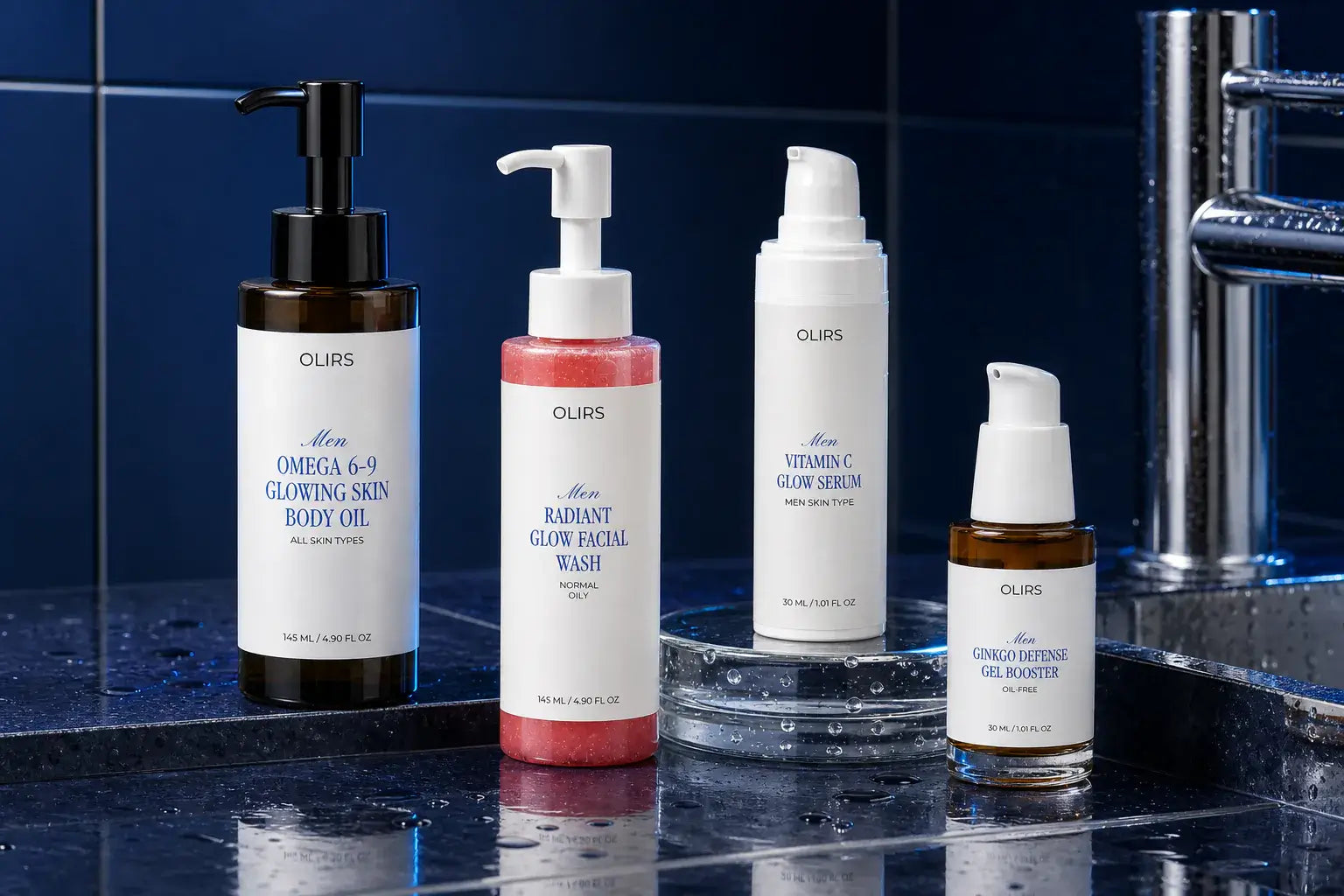
Flaky skin around the nose and mouth in 2026 almost always comes down to a stripped barrier, not dry weather. Fix the order you apply things in and the flaking usually clears in days, not weeks.
- How to fix flaky skin on face starts with cutting the cleanser, not adding more moisturizer.
- Water above 100°F strips the same lipids a serum is trying to replace.
- Gentle Cleansing Milk and All-In-One Facial Oil are the two Olirs products that can back the From Farm To Face claim — pair them for nose-and-mouth flaking.
- Pause retinol alternatives and AHAs near the nose and mouth; flaking spikes for 7-10 days if you don't.
- Verdict: layer a humectant, seal with oil, skip the harsh cleanser, and give the barrier its usual 28-day reset before judging results.
Why this matters
The skin around your nose and mouth is thinner than the skin on your cheeks and forehead, and it gets washed, wiped, and shaved more often than anywhere else on your face. That combination breaks down the lipid layer that normally keeps water in and irritants out.
Once that barrier is compromised, water evaporates off the surface faster than it should. The top layer of skin cells dries out and lifts, which reads as flaking. Cold air and indoor heating speed that process up — double-glazed windows and central heating common in 2026 homes don't stop it, they just make the air drier for longer stretches of the day.
Over-cleansing makes it worse. So does layering an exfoliating acid on top of skin that's already compromised. None of this is permanent damage. It's a barrier problem, and barrier problems respond to routine changes faster than most men expect.
What you'll need
- A cream or milk cleanser instead of a foaming or gel one — Gentle Cleansing Milk is cold-pressed from shea, argan, and jojoba and won't strip further
- Lukewarm water, not hot — 100°F is the ceiling
- A humectant serum or gel to pull water into the skin while it's damp
- A facial oil or occlusive moisturizer to seal that water in
- SPF for daytime, since a stripped barrier sunburns faster
- 10 minutes, morning and night, for about four weeks before you judge the result
The steps
1. Switch your cleanser before you do anything else
Most flaking around the nose and mouth traces back to what's touching the skin twice a day, not what's missing from it. Foaming cleansers and bar soap both use surfactants that strip lipids along with dirt, and the nose and mouth area has less natural oil to begin with, so it shows the damage first.
Swap to a milk or cream cleanser for two weeks straight. Gentle Cleansing Milk is one of two products in the Olirs skincare lineup certified COSMOS Natural with a traceable ingredient list — Ecocert's audit covers where the shea, argan, and jojoba came from and how they were pressed, which is a longer process than a brand just calling a formula gentle on the label.
Common mistake: switching cleansers but still using a washcloth or exfoliating pad on top. The cleanser change does nothing if you're still scrubbing the same area right after.
2. Drop the water temperature
Hot water feels good and does the most damage. Above 100°F, water strips the same lipid layer a moisturizer is trying to rebuild, which means you're undoing step one in real time, every single wash.
Wash with lukewarm water and pat — don't rub — dry with a clean towel. Fifteen seconds of blotting is enough. Skin that's still slightly damp absorbs the next product better than skin that's been left to air-dry.
Common mistake: a hot shower followed by a cold-water splash to "close pores." Pores don't open or close with temperature, and the cold rinse doesn't undo what the hot water already did to the barrier.
3. Apply a humectant while skin is still damp
A humectant pulls water into the skin — hyaluronic acid is the most common one — but it only works if there's water nearby to pull from. Apply it within 60 seconds of patting dry, while skin is still damp, not after it's fully air-dried.
Double Hydration Boost Gel HA layers multiple molecular weights of hyaluronic acid, which means it hydrates at more than one depth instead of sitting on the surface alone.
Common mistake: applying a humectant to bone-dry skin in a dry room. With no ambient moisture to draw from, hyaluronic acid can pull water out of the skin instead of into it.
4. Seal it in with an oil or a heavier cream
Water evaporates off damp skin unless something occlusive sits on top of it. A facial oil is the simplest seal, and it doesn't need to be heavy to work.
All-In-One Facial Oil is the second Olirs product that earns the From Farm To Face line: jojoba, rosehip, and sea-buckthorn, all cold-pressed, sourced from three distinct regions. Two to three drops, pressed in rather than rubbed, covers the nose-to-mouth area without leaving a shine.
Common mistake: skipping the seal step because skin "already looks moisturized" after the humectant. That look fades in under an hour without an oil or cream layered on top.
5. Pause actives near the nose and mouth for two weeks
Retinol alternatives, AHAs, and vitamin C all work by speeding up cell turnover or exfoliating the surface — useful for texture, counterproductive on skin that's already flaking. Applying them on top of a compromised barrier usually makes the flaking worse for 7-10 days before anything improves.
Keep actives on the rest of the face if you're already using them. Skip the nose-and-mouth zone specifically until the flaking clears.
Common mistake: adding a new active to "fix" the flaking. This is the single most common way men make it last twice as long as it needs to.
6. Wear SPF during the day, even indoors near windows
A compromised barrier burns faster and repairs slower under UV exposure. SPF 30 minimum, applied as the last step in the morning routine, protects skin that's already working overtime to rebuild itself.
Common mistake: treating SPF as a summer-only step. Indoor UV exposure through glass counts too, especially with the large windows common in 2026 apartments.
7. Give it the full four weeks
Skin's outer layer turns over on roughly a 28-day cycle. Cleaner routine choices show some improvement in the first week, but the flaking you see today was already forming under the surface before you noticed it. Full resolution tracks with that cycle, not with day three.
Common mistake: switching products again at day five because nothing changed yet. Constant switching is its own irritant, and it resets the clock every time.


Troubleshooting
- Flaking gets worse right after shaving. Shave after cleansing, not before, and skip alcohol-based aftershave until the barrier settles — alcohol strips further.
- Moisturizer sits on top instead of absorbing. That's usually a sign there's no humectant underneath. Add step three back in before blaming the oil.
- Flaking shows up with visible redness or stinging. That's past simple dryness. Stop actives entirely on that area and stick to cleanser plus oil until it calms down.
- Only the corners of the mouth flake. Check for lip-licking or mouth breathing at night — saliva evaporating off skin pulls more moisture than dry air alone.
- Flaking returns every winter. Indoor heating drops humidity well below what skin needs. In 2026 as in any other year, a humidifier in the bedroom does more than another product swap.
- White flakes that brush off, versus red patches that don't. Brush-off flaking is barrier dryness and responds to this routine. Red patches that persist past four weeks are worth a dermatologist visit, not another product.
Tools and resources
- A cream or milk cleanser — Gentle Cleansing Milk if you want the cold-pressed, traceable version
- A room humidifier for dry winter air
- A facial oil for the seal step — All-In-One Facial Oil covers the From Farm To Face sourcing on both ends
- SPF 30 or higher for daytime
- A read on what reactive-prone skin actually needs before you add anything new — see the Olirs guide to face oil for reactive, easily irritated skin
What to do next
If the flaking is part of a wider pattern — tightness, redness, stinging with products that never used to bother you — the fix isn't just this routine, it's picking gentler versions of everything you already own. The guide to a gentle facial cleanser for sensitive skin walks through what "gentle" actually means on an ingredient label instead of on a bottle.
FAQ
What causes flaky skin around the nose and mouth in men?
A stripped lipid barrier is the usual cause, not dry weather alone. Hot water, foaming cleansers, shaving, and exfoliating actives all speed up water loss in that thinner-skinned area, and the surface cells dry out and lift as visible flakes.
How to fix flaky skin on face fastest?
Switch to a cream or milk cleanser, drop water temperature below 100°F, and layer a humectant under an oil while skin is still damp. Most men see less flaking within a week, with full barrier recovery closer to the skin's 28-day renewal cycle.
Is a facial oil better than a moisturizer for flaky skin?
Neither works alone — an oil seals in water a humectant already put there. Applying oil to bone-dry skin with nothing underneath just adds shine without fixing the flaking.
Should I exfoliate flaky skin around my mouth?
No, not while it's actively flaking. Exfoliating acids and physical scrubs remove the compromised surface layer faster than the barrier underneath can repair, which usually extends the flaking by a week or more.
Can shaving cause flaky skin around the mouth?
Yes — the blade removes the top layer of skin along with hair, and that area already has less natural oil than the cheeks. Shave after cleansing rather than before, and skip alcohol-based aftershaves until flaking clears.
How long does it take to fix flaky skin on the face?
Cleanser and water-temperature changes show a difference within a week, but full recovery tracks with skin's roughly 28-day surface renewal cycle. Judging a routine change before four weeks is the most common reason men think something didn't work.
Does COSMOS Natural certification mean a product is gentler?
It means every ingredient in that Olirs formula and how it was extracted passed a third-party Ecocert audit, not that the formula is automatically gentle. Check the actual ingredient list for known irritants regardless of certification.
Is flaky skin around the nose a sign of a skin condition?
Simple white flakes that brush off usually point to barrier dryness. Red, persistent patches that don't respond to a gentler routine over four weeks are worth checking with a dermatologist rather than treating as ordinary dryness.
One last thing
The nose-to-mouth crease is the first place most men notice flaking because it's the area they touch most — wiping the nose, rubbing the mouth, dragging a towel across it after every wash. Before buying anything new in 2026, count how many times a day you actually touch that specific patch of skin. For a lot of men, the fix isn't a product at all. It's a habit.