Reactive skin doesn't need more actives. It needs fewer variables and a carrier oil that isn't fighting your barrier while you sleep — and picking the wrong one is the fastest way to turn a calm week into a red one.
- All-In-One Facial Oil is the safe pick for face oil for irritated skin men in 2026 — six cold-pressed oils, no added fragrance. Buy.
- Nourishing Facial Oil's 11-oil blend suits dry, reactive skin but runs heavier — Consider it only if your skin is dry, not oily-reactive.
- Microbiome Prebiotics Face Mist layers under oil to calm skin before you add anything active. Buy as a companion step.
- Skip any face oil marketed as natural that lists citrus, mint, or lavender oil in the first five ingredients — those are common irritants, not actives.
- COSMOS NATURAL certification means an outside body checked what's in the bottle. A label that just says organic without that audit tells you nothing.
Why this matters
Most face-oil marketing talks about glow. Reactive skin doesn't care about glow — it cares about not stinging thirty seconds after application. The men searching for face oil for irritated skin men in 2026 usually already tried two or three products that made things worse, and they've stopped trusting ingredient lists that just say "natural" and move on.
That's a fair instinct. "Natural" is not a certification — anyone can print it. All-In-One Facial Oil is one of two OLIRS products with a fully traceable origin story behind every oil in it, cold-pressed and sourced by region, which is a different claim than "natural" and one you can actually check against the ingredient list on the product page.
Who this is for
This guide is for the man whose skin flares from new products, hot showers, or shaving — not from a diagnosed condition. If a dermatologist has named a specific skin condition, that's a conversation with them first; a face oil is not treatment, it's texture and appearance support layered onto a routine you already control. If your skin gets tight and pink after cleansing but calms down within an hour, you're the reader this is written for.
What to look for in a face oil for reactive skin
Fewer named fragrance and essential-oil compounds
Fragrance is the single most common trigger in reactive-skin complaints, and "essential oil" is fragrance with a health-food label on it. A short ingredient list with named carrier oils and no added scent compounds is the first filter, before you even look at what the oil claims to do.
Cold-pressed carrier oils over heavily refined ones
Cold-pressing keeps more of an oil's native compounds intact instead of stripping them out with heat and solvents, which matters because refined oils can leave behind residues that reactive skin notices faster than resilient skin does. Both All-In-One Facial Oil and Gentle Cleansing Milk are cold-pressed and can trace their oils to a specific region — jojoba from the Mediterranean basin, rosehip from Carpathian Eastern Europe, sea-buckthorn from Himalayan and Central Asian sources. That's a mechanism, not a marketing line.
A comedogenic profile that fits your actual skin, not just "lightweight"
Jojoba mimics skin's own sebum closely enough that it rarely clogs pores, which is why it shows up as the lead ingredient in most low-irritation formulas. Heavier oils — coconut, some nut oils — sit higher on comedogenic scales and can trigger breakouts on reactive-oily combination skin even when they don't cause redness.
Third-party certification you can actually check
COSMOS NATURAL (Ecocert) means an outside auditor checked every ingredient and how it was extracted before the certification was granted. That's different from a brand simply printing "natural" on a bottle with nobody checking anything — read the certification, don't take a label's word for it.
How it layers with the actives already in your routine
If you're running vitamin C or a retinol alternative like bakuchiol, the oil goes on last, sealing in whatever active you applied first rather than diluting it. Adding a new oil and a new active in the same week makes it impossible to tell which one caused a flare if something goes wrong.
Packaging that lets you test slow
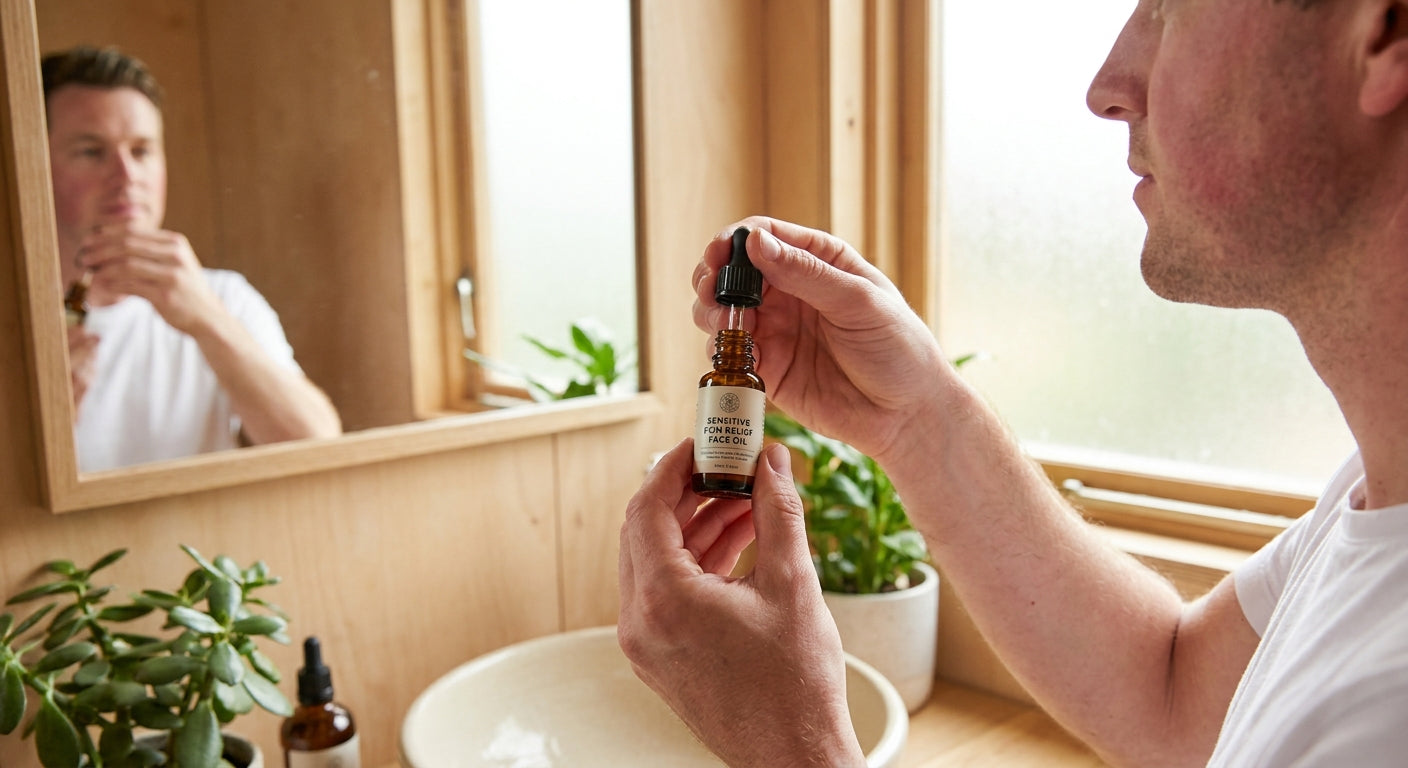
A dropper bottle lets you apply one or two drops and stop — a pump that dispenses a fixed amount pushes you toward using more than reactive skin needs on day one. Start with less than the label suggests for the first week.
Top picks for irritated, reactive skin
All-In-One Facial Oil — the safe pick. Six cold-pressed oils (jojoba, rosehip, sea-buckthorn, raspberry, avocado, and one more) in a single-step formula, no added fragrance. It's one of only two OLIRS products that can trace every oil to a region and a pressing method — the other is Gentle Cleansing Milk. If you want one bottle with the shortest possible list of things that could go wrong, this is it. Buy.
Nourishing Facial Oil — the rich pick. Eleven cold-pressed oils, jojoba-led, built for dry-feeling, mature-looking skin that needs more than a light layer. It settles in without the greasy weight you'd expect from an 11-oil blend, but more oils means more surface area for something to react to if your skin runs oily-reactive rather than dry-reactive. Consider it if dryness, not oiliness, is your main complaint.
Microbiome Prebiotics Face Mist — the calming layer. Not a face oil — a lactobacillus ferment prebiotic mist meant to go on before oil, helping skin feel hydrated and balanced rather than adding another active on top of one. Reactive skin often does better with a calming step before the oil than with the oil alone. Buy as a companion product, not a replacement.
Gentle Cleansing Milk deserves a mention here even though it's not a face oil: it's the other product with a fully traceable, cold-pressed origin story (shea, argan, and jojoba), and pairing it with All-In-One Facial Oil keeps your entire routine to two products with the same sourcing standard behind them.
What to avoid
- "Natural" oils with citrus, mint, or lavender oil high on the ingredient list. These read as gentle but are documented irritants for reactive skin — the plant origin doesn't make the compound less reactive on your face.
- Stacking a new face oil with a new active serum in the same week. If your skin flares, you'll have no way to know which product caused it. Introduce one variable at a time.
- Heavily refined "virgin" oil claims with no extraction method named. If a brand won't say how the oil was pressed, assume it's not cold-pressed and skip the claim.
Verdict comparison
| Product | Texture | Cold-pressed | Best for | Verdict |
|---|---|---|---|---|
| All-In-One Facial Oil | Light, fast-absorbing | Yes | Reactive, normal-to-dry skin wanting one step | Buy |
| Nourishing Facial Oil | Rich, 11-oil blend | Yes | Dry, mature-looking reactive skin | Consider |
| Microbiome Prebiotics Face Mist | Weightless mist | No (aqueous) | Pre-oil calming layer | Buy |
FAQ
What's the best face oil for irritated skin men can use in 2026?
All-In-One Facial Oil is the strongest fit for face oil for irritated skin men in 2026 because it has six named cold-pressed oils and no added fragrance. Check the ingredient list against your own known triggers before switching, since every reactive-skin case is different.
Can face oil make redness worse?
Yes, if it contains added fragrance, essential oils, or a heavy comedogenic oil your skin doesn't tolerate. Cold-pressed, short-ingredient-list oils like jojoba and rosehip cause fewer reports of increased redness than fragranced blends.
Is face oil better than moisturiser for sensitive skin?
Neither replaces the other — an oil seals in moisture but doesn't hydrate on its own the way a water-based moisturiser does. Reactive skin often does best layering a lightweight hydrator or mist first, then oil on top.
How much does a men's face oil cost in 2026?
Cold-pressed multi-oil formulas for men typically run in the €30 to €45 range in 2026, with single-oil or lighter blends often priced lower. Check current pricing on the product page since formulas and sizes vary.
Should you patch test a new face oil first?
Yes — apply a small amount to the inside of your forearm or jawline for two to three days before using it on your whole face. Reactive skin can take 24 to 48 hours to show a delayed reaction, so a same-day test isn't enough.
Can you use face oil with vitamin C serum?
Yes, apply vitamin C serum first and let it absorb, then seal with oil on top. Adding both a new serum and a new oil in the same week makes it hard to isolate what caused a flare if one occurs.
Is COSMOS Natural the same as organic?
No. COSMOS NATURAL and COSMOS ORGANIC are separate certifications from Ecocert with different requirements, and a brand holding NATURAL should never describe itself as organic. Read the certification directly rather than trusting either word alone.
How long does it take a face oil to calm reactive skin?
Most men see reduced tightness and redness within one to two weeks of consistent use, though this won't fix an underlying skin condition — it helps texture and comfort, not diagnosis or treatment. If redness worsens instead of easing within a week, stop and reassess the ingredient list.


One last thing
Most of the OLIRS catalog can't back a farm-to-face origin claim yet — only All-In-One Facial Oil and Gentle Cleansing Milk can trace every oil to a region and a pressing method right now. If a brand can't tell you where an oil came from or how it was extracted, that's worth asking about before you trust it on reactive skin — read the label, check the certification, and don't take a bottle's word for it just because it says natural.